
The Tata Group stands among India’s most influential and trusted business houses, with a legacy stretching back to 1868. From steel and automobiles to technology, retail, hotels, and aviation, its diverse businesses operate across several industries and countries. But how much is the Tata Group net worth in 2026? The answer depends on how you measure its value.
The Tata Group valuation can include the market value of listed companies, private businesses, investments, and assets held through Tata Sons. Its Tata Group market cap alone runs into lakh crores, while Tata Group revenue reaches billions of dollars annually. Understanding its Tata Group assets reveals why this Indian corporate giant has become such a powerful global business empire.
Tata Group Net Worth at a Glance

The simplest way to understand the Tata Group valuation is to look at the combined Tata Group market cap of its publicly traded businesses. Recent estimates place that figure near ₹26 lakh crore. The number changes daily because share prices move throughout every trading session.
However, the broader Tata Group wealth extends beyond listed shares. Private holdings, brands, property, investments and Tata Sons valuation also matter. That’s why estimates of the group’s overall worth can differ significantly from its combined stock-market value.
| Financial Measure | Approximate 2026 Figure |
|---|---|
| Combined listed value | ₹26 lakh crore+ |
| TCS market value | ₹8 lakh crore+ |
| Tata Sons estimated value | Several lakh crore |
| Group companies | 100+ operating companies |
| Group presence | India and international markets |
| Founded | 1868 |
Tata Group Net Worth in 2026
The headline Tata Group net worth in 2026 should be treated as an estimate rather than an audited personal-style net-worth figure. A conglomerate doesn’t publish one balance-sheet number called “net worth” for the entire group. Instead, analysts examine its listed holdings, private businesses, assets and liabilities.
That distinction matters. Tata Consultancy Services, TCS, Tata Motors, Tata Steel and other businesses each have their own valuations. Combining those values gives one useful picture of group scale, but it doesn’t capture every asset owned through private entities.
How Much Is Tata Group Worth in 2026?
So, how much is the Tata Group net worth today? A practical answer starts with its publicly traded businesses. Their combined market capitalization has been estimated at more than ₹26 lakh crore in 2026, making Tata one of India’s largest corporate groups by listed market value.
Still, market capitalization isn’t the same as net worth. The Tata Group market value moves with investor sentiment, earnings expectations and stock prices. Meanwhile, private businesses such as Tata Capital require separate valuation methods. This creates a wider range when calculating the group’s total economic worth.
Tata Group Market Cap vs Net Worth
Market cap simply measures the value investors assign to a company’s publicly traded shares. Net worth takes a broader approach. It considers assets after liabilities. For Tata, analysts may also account for ownership stakes between group entities to avoid double-counting the same economic value.
This is why you may see different figures online. One article might quote the combined market cap of Tata’s listed companies. Another may add private businesses and unlisted businesses. Both figures can be useful when their calculation methods are clearly explained.
Tata Sons Valuation and Its Importance
At the heart of the structure sits Tata Sons, the group’s principal holding company. It owns stakes in many major Tata businesses and plays a central role in protecting the Tata brand. Its value therefore has a major impact on broader estimates of Tata’s worth.
The Tata Sons net worth isn’t simply the sum of every Tata company. Analysts must consider its direct holdings, liabilities, discounts applied to holding companies and other assets. Its ownership structure also connects the group with Tata Trusts and their philanthropic work.
How Tata Group Built Its Business Empire
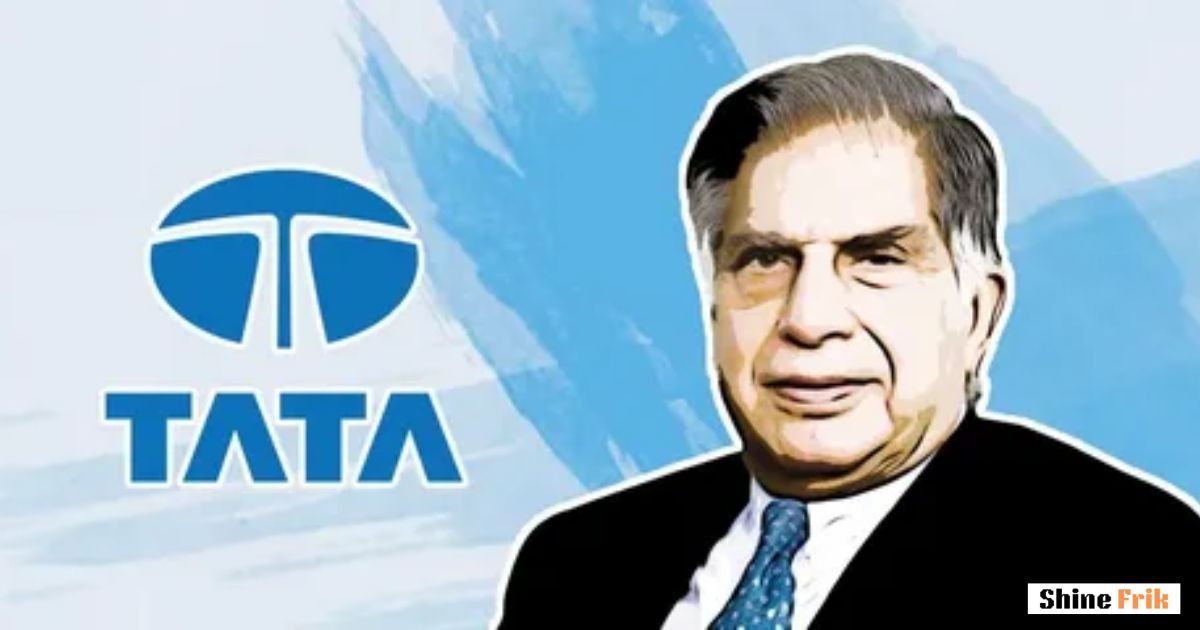
Few Indian companies have a history as long as Tata’s. Jamsetji Tata, widely regarded as the Tata Group founder, started the enterprise in 1868. His vision went far beyond commercial profit. He wanted India to build strong industries, scientific institutions and modern infrastructure.
Over time, that vision became reality. Tata Steel helped establish India’s industrial base. The Taj created a landmark hospitality business. Tata Power entered the energy sector. Later, technology and global acquisitions transformed Tata into a multinational corporation with a remarkable international footprint.
From Jamsetji Tata to a Global Conglomerate
The early Tata story was built around nation-building. Jamsetji’s ambitions included steel, education, hotels and hydroelectric power. Those ideas eventually produced institutions and companies that became deeply woven into India’s economic history.
The group later expanded into chemicals, automobiles, consumer goods and technology. This diversification gave Tata a sturdy foundation. When one sector faced pressure, another could provide resilience.
Ratan Tata and Tata’s International Expansion
The arrival of Ratan Tata as group chairman marked another major chapter. Under his leadership, Tata pursued bold Tata Group acquisitions overseas. Tetley, Corus and Jaguar Land Rover became some of its best-known international deals.
These acquisitions changed Tata’s character. The group was no longer mainly an Indian industrial house. It became a global network with brands, factories, employees and customers across continents.
Tata Group Under Natarajan Chandrasekaran
Today, Natarajan Chandrasekaran leads the group as Tata Group chairman. His tenure has focused on digital businesses, manufacturing, electric mobility, aviation, electronics and renewable energy.
The acquisition of Air India brought aviation back into Tata’s portfolio. At the same time, new investments in semiconductors, batteries and clean technology point toward a more technology-driven future.
Major Companies Owned by Tata Group
The strength of the Tata Group companies comes from diversification. Technology generates huge international revenue. Automobiles provide industrial scale. Consumer brands reach millions of Indian households. Hotels, retail, energy and financial services add further depth.
Among its best-known businesses are Tata Consultancy Services, Tata Motors, Tata Steel, Titan, Trent, Tata Power and Tata Consumer Products. The wider network also includes private businesses and numerous Tata Group subsidiaries.
Tata Consultancy Services and TCS
Tata Consultancy Services is arguably the group’s most valuable listed business. Known globally as TCS, it provides IT services to banks, retailers, manufacturers, governments and other large organizations.
Its enormous international customer base makes TCS a major source of Tata Group revenue. Changes in technology spending, artificial intelligence and global economic conditions can therefore influence the group’s overall market value.
Tata Motors and Jaguar Land Rover
Tata Motors gives the group a powerful position in the automotive industry. Its business covers passenger vehicles, commercial vehicles and electric mobility.
The company also owns Jaguar Land Rover, which operates premium brands around the world. JLR adds international reach and exposes Tata Motors to global luxury-car demand, currency movements and changing vehicle technology.
Tata Steel
Tata Steel represents one of the group’s oldest industrial pillars. Its operations span India and international markets, making it an important participant in the global steel industry.
Steel prices, construction activity, energy costs and economic growth can strongly influence its performance. Even with these cycles, steel remains central to Tata’s industrial identity.
Tata Consumer Products, Titan and Trent
Tata Consumer Products connects the group with everyday purchases. Its portfolio includes Tata Tea, Tata Salt, Tetley, Eight O’Clock Coffee and Himalayan.
Meanwhile, Titan has built powerful positions in jewellery and watches through brands such as Tanishq. Trent operates major retail formats including Westside and Zudio, giving Tata a strong presence in India’s fast-growing retail business.
Other Major Tata Businesses
The wider portfolio includes Tata Power, Tata Chemicals, Tata Elxsi, Tata Communications and Voltas. These businesses operate across energy, chemicals, engineering, digital infrastructure and consumer appliances.
Indian Hotels operates the famous Taj Hotels brand. Tata Capital strengthens the group’s position in financial services, while Air India provides a major platform for rebuilding its aviation business.
Tata Group Revenue and Major Sources of Income

The group’s size becomes clearer when you examine its revenue streams. Tata Group revenue comes from technology, automobiles, steel, consumer products, retail, hotels, energy and financial services. This broad base reduces dependence on one industry.
Its Tata Group revenue sources also stretch across countries. TCS earns heavily from overseas clients. JLR sells vehicles worldwide. Tata Steel operates internationally. Consumer brands and hotels serve both Indian and global customers.
Technology, Automotive and Steel Revenue
Technology remains a crucial contributor through TCS. The company earns from consulting, cloud services, software development, cybersecurity and digital transformation. Artificial intelligence is now reshaping this market.
Automotive and steel add another large layer. Tata Motors benefits from vehicle sales and JLR operations. Tata Steel depends more heavily on industrial demand and commodity cycles. Together, these businesses create a broad industrial revenue base.
Consumer, Retail and Hospitality Income
Consumer products bring Tata into homes across India. Tata Tea and Tata Salt are familiar household names. Tetley extends that reach internationally. These businesses generate recurring Tata Group income from everyday consumption.
Retail and hospitality provide another growth engine. Titan benefits from India’s rising demand for branded jewellery and watches. Trent’s Zudio and Westside formats target changing urban shopping habits. Taj Hotels benefit from domestic tourism and international travel.
Tata Group Assets, Investments and Business Segments
The Tata Group assets stretch well beyond shares traded on Indian exchanges. They include factories, offices, hotels, intellectual property, brands, infrastructure, investment holdings and private businesses. The full picture therefore requires more than a stock-market calculation.
Its Tata Group investments also show where management expects future growth. Electronics, electric mobility, renewable energy and aviation have received increasing attention. These choices could reshape the group’s investment portfolio over the coming decade.
Tata Sons and Tata Trusts
Tata Sons sits at the center of the group’s ownership structure. A large portion of its equity is associated with philanthropic trusts, particularly the Sir Dorabji Tata Trust and Sir Ratan Tata Trust.
This structure is unusual among global conglomerates. Dividends generated through Tata’s businesses help support charitable work in areas such as education, healthcare, livelihoods and social development.
Tata Group Business Segments
The Tata Group business segments cover technology, automobiles, steel, consumer products, retail, hospitality, power, chemicals, communications, finance and aviation. Such diversification gives the group several independent growth pathways.
It also creates complexity. Each sector responds to different economic forces. IT depends on technology spending. Steel responds to commodity cycles. Retail depends on consumers. Energy responds to demand and regulation.
Listed and Unlisted Businesses
The distinction between Tata Group listed companies and private businesses is essential. Listed firms have transparent share prices. Private entities require financial statements, comparable companies and analyst assumptions for valuation.
That explains why an estimate based only on listed shares can understate the group’s broader economic footprint. Private assets and Tata Group investments and assets must also be considered.
Tata Group’s Recent Financial Performance and Growth
Recent Tata Group financial performance reflects both strength and transition. TCS has faced pressure from changing technology budgets and artificial intelligence concerns. At the same time, businesses such as retail, automotive and energy offer different growth opportunities.
The group’s Tata Group financial highlights also show how important capital allocation has become. Management is investing in future industries while maintaining established businesses. That balancing act could shape Tata Group growth for years.
Recent Revenue and Profit Trends
Group-wide performance shouldn’t be judged through one subsidiary. TCS may have strong margins while steel faces commodity pressure. Automotive earnings can rise while another business experiences weaker demand.
This diversity makes Tata’s financial picture more nuanced. Investors often study individual company results before forming a view about the wider group.
Major Investments and Expansion Plans
The group’s recent Tata Group expansion has focused increasingly on strategic manufacturing and technology. Semiconductor projects, electric vehicles, renewable power and advanced electronics could become major long-term value drivers.
These investments also align with India’s push for domestic manufacturing. If execution goes well, Tata could gain from both rising Indian demand and government support for strategic industries.
Tata Capital and Other Developments
Tata Capital is another important piece of the puzzle. Its financial-services business gives Tata exposure to consumer lending, commercial finance and wealth-related services.
An eventual public listing could make its value easier for investors to assess. More importantly, it could provide another major listed asset within the Tata ecosystem.
Tata Group’s Global Presence and Market Position
The Tata Group global presence is one of its defining strengths. TCS serves clients worldwide. JLR sells premium vehicles across major markets. Tata Steel has international operations. Hotels and consumer businesses continue to expand beyond India.
This network makes Tata more than a domestic conglomerate. Its global operations expose the group to international currencies, regulations and economic cycles. They also provide access to huge customer markets.
Tata Group’s International Businesses
Tata’s international reach grew sharply through acquisitions and organic expansion. JLR remains its most visible overseas automotive asset. TCS has built a vast technology workforce across global markets.
This international footprint supports Tata’s position as a multinational corporation. It also gives Indian investors exposure to businesses that compete directly with major global companies.
Tata Group vs Reliance and Adani
Comparisons with Reliance and Adani require care. Tata is a collection of many businesses. Reliance Industries is a major listed company with several large divisions. The Adani ecosystem also contains multiple listed entities.
By diversification, Tata has a particularly broad portfolio. By individual-company market value, however, rankings can change rapidly. Share prices make such comparisons moving targets.
Tata’s Global Business Position
Tata’s combination of technology, automobiles, steel, consumer products and hospitality gives it unusual breadth. Few Indian groups have such a wide international footprint.
Its reputation adds another intangible asset. The Tata name carries significant recognition in India and overseas. That brand equity can support customer trust, recruitment and long-term business expansion.
Tata Group Net Worth in Indian Rupees: What the Numbers Really Mean
For Indian readers, a figure such as ₹26 lakh crore can sound almost unreal. One lakh crore equals ₹1 trillion. Therefore, ₹26 lakh crore represents more than ₹26 trillion in Indian currency.
Yet the headline number needs context. Tata Group valuation in rupees can refer to combined market capitalization or a broader estimated enterprise value. These aren’t interchangeable measures.
What Is ₹1 Lakh Crore?
The Indian numbering system makes very large corporate figures easier to describe. One crore equals ₹10 million. One lakh crore equals ₹1 trillion.
So, when analysts mention tens of lakh crores, they’re describing a value measured in trillions of rupees. That’s why a seemingly simple number can represent enormous economic scale.
Market Cap, Revenue, Assets and Net Worth
Market capitalization measures the value of publicly traded shares. Revenue measures sales generated during a period. Assets represent resources owned by a business. Net worth generally refers to assets after liabilities.
For Tata, these measures can produce very different numbers. A company can have high revenue without having the highest market value. Likewise, a large asset base doesn’t automatically mean equally high profits.
Why Tata Group Valuation Estimates Differ
The Tata Group valuation changes because listed share prices change. Private businesses create another layer of uncertainty. Holding-company discounts can reduce the estimated value of Tata Sons.
Analysts also use different assumptions about future profits. Consequently, there isn’t one permanent figure that defines Tata’s entire worth.
Future Growth, Challenges and Outlook for Tata Group
The Tata Group future prospects look closely tied to India’s next industrial cycle. Electric mobility, electronics, renewable energy and digital technology could become major value creators.
However, growth won’t come automatically. Tata must manage capital carefully while competing against global companies. Execution, innovation and customer demand will determine whether these investments deliver strong returns.
Electric Vehicles and Clean Energy
Electric vehicles could become a major pillar of Tata’s automotive strategy. India’s EV market is expanding as charging networks improve and consumer awareness rises.
At the same time, clean energy creates opportunities for Tata Power and related businesses. Solar generation, batteries and grid infrastructure could support India’s long-term energy transition.
Semiconductor and Electronics Manufacturing
Semiconductor manufacturing is another potentially transformative opportunity. India wants to build a stronger electronics supply chain, and Tata has positioned itself to participate in that shift.
Success would give the group exposure to a strategic industry. It could also strengthen domestic manufacturing and create a new technology-focused revenue stream.
Technology and Artificial Intelligence
Artificial intelligence presents both an opportunity and a challenge for TCS. AI can improve productivity and create new services. It can also reduce demand for some traditional technology work.
The key question is how quickly Tata’s technology businesses adapt. Strong AI capabilities could reinforce TCS’s position as a global technology provider.
Key Risks Facing Tata Group
Large scale doesn’t eliminate risk. Tata faces commodity-price swings, global recessions, currency changes, geopolitical tensions and intense competition.
The group’s diversified structure provides some protection. Still, investors should examine each business separately rather than assuming every Tata company will perform equally well.
- Read More: Peter Woo and Oprah Winfrey
- Read More: Messi Net Worth in Rupees
FAQs
What Is the Tata Group Net Worth in 2026?
The estimated Tata Group net worth varies by methodology. The combined market value of its major listed businesses has been estimated at more than ₹26 lakh crore in 2026. Adding private businesses and other holdings produces a different figure.
Who Owns Tata Group?
Tata Sons is the principal holding company within the Tata structure. Tata Trusts hold a significant ownership interest in Tata Sons. The structure allows business income to support both commercial operations and philanthropic activities.
What Is Tata Sons’ Net Worth?
The Tata Sons valuation varies among analysts because the company is unlisted. Its value depends on its stakes in Tata businesses, liabilities, holding-company discounts and other assets.
Which Is the Richest Tata Company?
TCS has generally been the largest Tata company by market capitalization. Its position can change with stock-market movements. Its scale in global IT services makes it a crucial part of Tata’s overall value.
Is Tata Group Richer Than Reliance?
The answer depends on the measurement. Tata has a huge collection of companies and assets. Reliance Industries has enormous market value through one listed parent with several major businesses. Direct comparisons should therefore use the same valuation method.
How Many Companies Does Tata Group Own?
The wider Tata ecosystem includes more than 100 operating companies across multiple sectors. The number of listed entities is much smaller. The group also has numerous subsidiaries and private businesses.
What Is Tata Group’s Annual Revenue?
The group’s aggregate revenue runs into many billions of dollars annually. Because different Tata companies report separately, group-level revenue figures depend on the reporting period and consolidation method used.
Who Is the Chairman of Tata Group?
Natarajan Chandrasekaran serves as chairman of the Tata group. He has overseen major initiatives involving aviation, technology, manufacturing, electric mobility and new strategic investments.
How Did Tata Group Become So Successful?
Tata built its corporate empire through long-term thinking, diversification, strong brands and major investments. Its strategy has repeatedly combined established industries with emerging opportunities.
What Are Tata Group’s Biggest Businesses?
The biggest businesses include Tata Consultancy Services, Tata Motors, Tata Steel, Titan, Tata Consumer Products, Tata Power and other major companies. Their relative size changes with market conditions and financial performance.

Shine Frik delivers updated net worth insights, celebrity income details, lifestyle facts, and wealth analysis from around the world.